
- Your cart is empty
- Continue Shopping


Essential Vitamins for a Healthy Lifestyle
-
Wallfort
- Posted on
- 0 comments
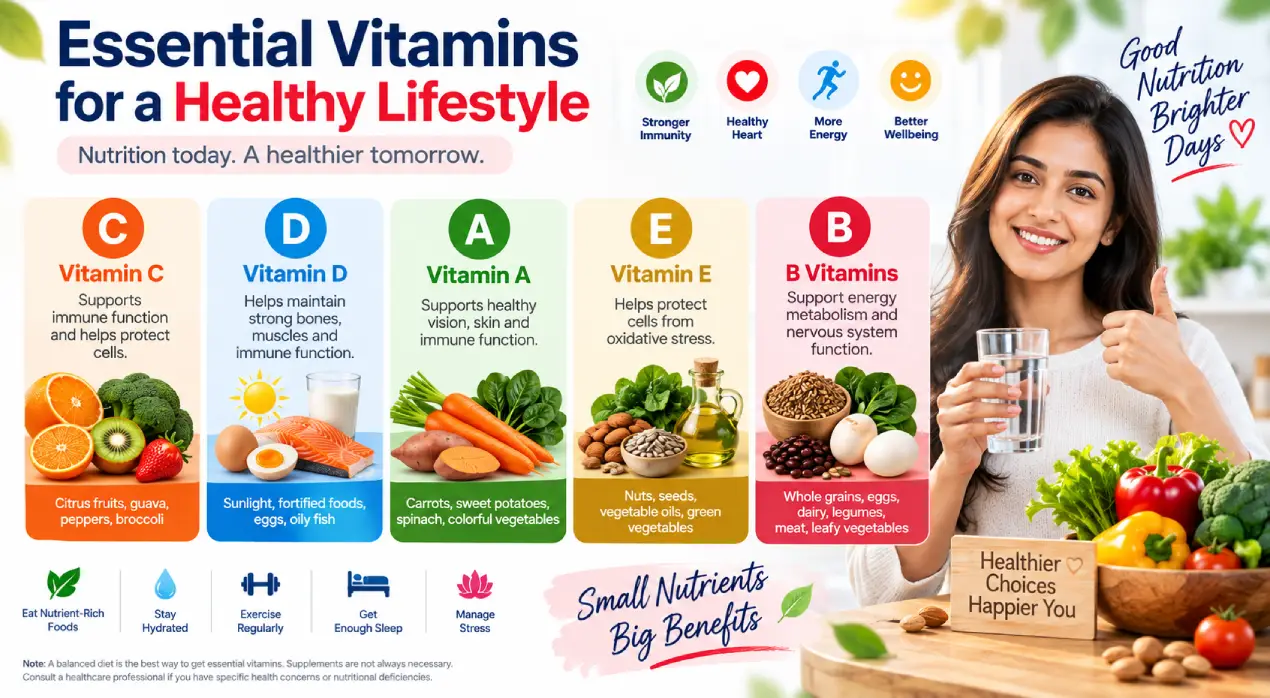
Vitamins are essential nutrients that help the body perform numerous important functions. Eating a varied and balanced diet is generally the best way to obtain the vitamins your body needs.
Vitamin C supports normal immune function and helps protect cells from oxidative stress. Citrus fruits, guava, peppers, tomatoes, and broccoli are good sources.
Vitamin D contributes to normal bones, muscles, and immune function. Sunlight and foods such as fortified products and oily fish can provide vitamin D.
Vitamin A supports normal vision, skin, and immune function. Carrots, sweet potatoes, spinach, and other colorful vegetables contain vitamin A or its precursors.
Vitamin E helps protect cells from oxidative stress. Nuts, seeds, vegetable oils, and certain green vegetables are useful dietary sources.
B Vitamins help support energy metabolism and nervous-system function. Whole grains, eggs, dairy products, legumes, meat, and leafy vegetables can provide different B vitamins.
The amount needed varies by age, lifestyle, and individual circumstances. Supplements aren’t always necessary, and excessive intake of certain vitamins can be harmful. Focus on a balanced diet and speak with a healthcare professional if you think you may have a deficiency.